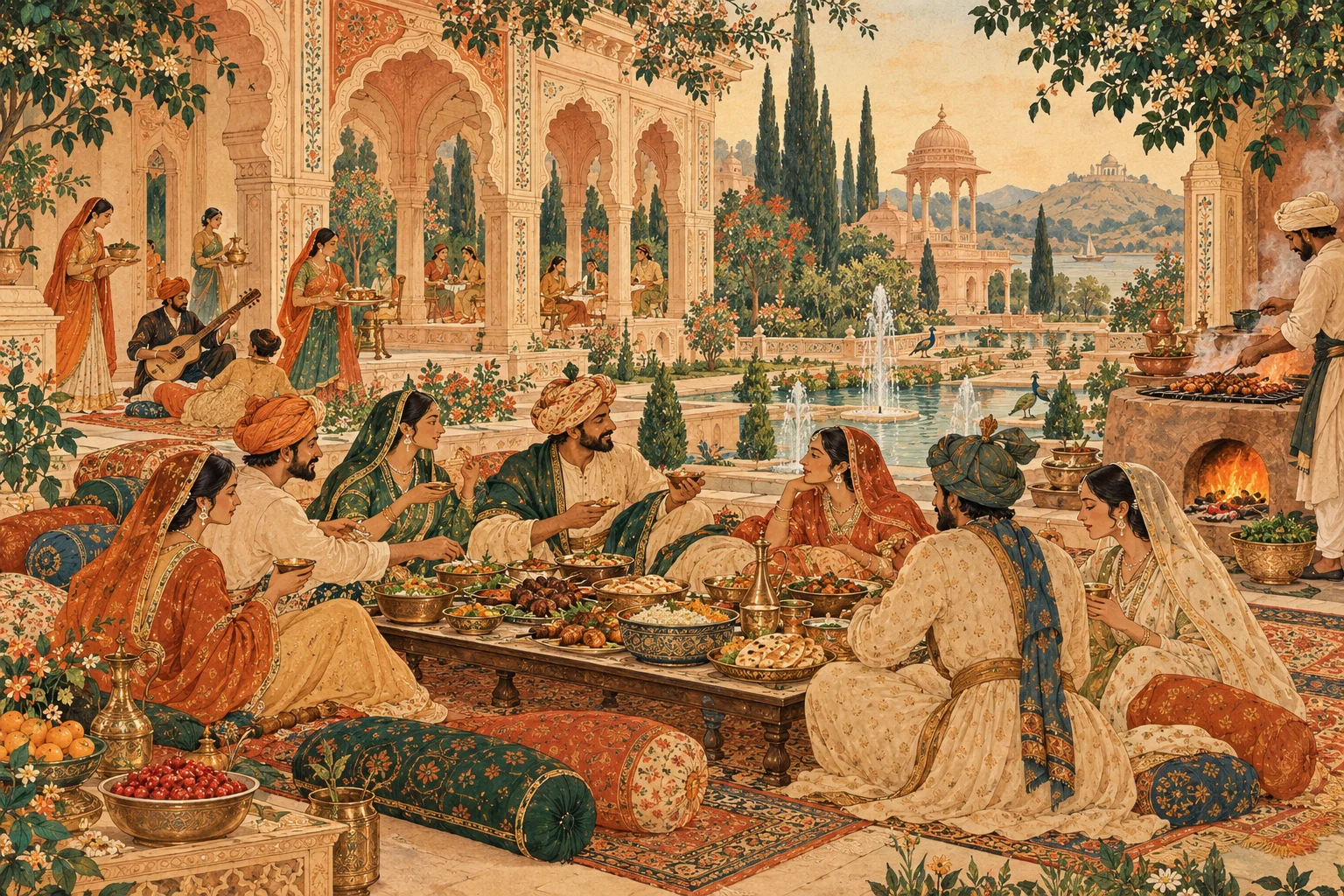
Our imagined table
Picture a table that keeps making room. Someone tears the naan; someone passes a platter before taking their own share. There is laughter over the last piece, a little smoke in the air, and absolutely no reason to rush. This is the Bhaijaan legend: an imagined scene of hospitality, created to express the welcome we want to give.
At Bhaijaan’s table every guest gets a royal welcome. The royalty is in the feeling: being expected, being fed, being invited to stay. Our story borrows that sense of occasion without claiming a royal family tree. A weekday lunch deserves the same warmth as a feast, even when the feast fits inside a naan roll.
Imagine arriving hungry after a long day. A plate lands, the conversation pauses, and the first mouthful earns a smile. That small moment is the centre of our imagined feast. The setting can change; the invitation to enjoy yourself stays the same.
Many roads to the table
The history behind these flavours is richer than a single origin story. The Smithsonian’s culinary journey along the Silk Road describes Persian influences on Mughal cooking, alongside the movement of ingredients and techniques across regions. It also places tandoor-baked flatbreads in a broad geography spanning Iran, India, Pakistan, Afghanistan and Central Asia.
One wonderfully specific detail comes from Kew’s account of cardamom: recipes from the Sultan of Mandu’s court around 1500 included the spice in sherbets and rice dishes. Picture the fragrant lift of a little pod in a cool drink or a celebratory bowl of rice. That is a delicious starting point for curiosity about the courtly table.
Pull a book off the shelf
The most enjoyable way to make this history tangible is to open a recipe. Our journey inside the royal cookbooks follows three texts, from Mandu’s Ni’matnama to the kitchens described in the Ain-i Akbari and Nuskha-e-Shahjahani. Bring your appetite for detail: an ingredient list can be the beginning of a much better conversation than a sweeping legend.
From the dhaba to today
Modern Punjabi tandoori cooking has another important context. Incredible India’s guide to Amritsar connects tandoori chicken and fish tikka with settlers from Peshawar and Lahore, and describes the city’s dhaba culture in the aftermath of Partition. Migration and everyday food businesses belong in this story alongside lavish banquets.
At our table, the pleasure is immediate. Tikka Boti brings yoghurt and spice; Malai Boti takes a gentler turn with yoghurt, cream and cashew paste. Cardamom lends a delicate fragrant note to that creamy marinade. Paneer, naan and fresh salad make room for different appetites. The best bite might be the one you assemble yourself: warm bread, a smoky edge, something cool and crisp.
Make a little occasion of it
Choose the flavour you fancy, leave space for conversation, and pass something across the table. You do not need silver dishes or a special date. A generous welcome and a good plate are enough to make an ordinary afternoon feel worth remembering.